"Slipped disc" explained: disc bulge vs herniation
 Dr. Haleema Khan, British, UK-trained female chiropractor (MChiro)
13 October 2026 · 5 min read
Many patients arrive having been told they have a "slipped disc". It is a frightening phrase, and it isn't quite accurate: discs are firmly attached to the vertebrae above and below them and can't slip out of place. What can happen is a bulge or a herniation.
What a disc is
Between each pair of vertebrae sits a disc: a tough, fibrous outer ring with a softer, gel-like centre. Discs act as shock absorbers and allow your spine to bend and twist.
Disc bulge
In a bulge, the disc is squashed and spreads outward, but the soft centre stays inside the outer ring. Disc bulges are very common, become more common with age, and often show up on scans of people who have no pain at all. A bulge on an MRI report does not automatically explain your symptoms.
Disc herniation
In a herniation, some of the soft centre pushes through a weakness in the outer ring. If it presses on or irritates a nearby nerve, it can cause pain, tingling or numbness down the leg, often called sciatica.
The encouraging part
Most people with a disc problem improve without surgery, usually over weeks to a few months. Staying gently active, positions and exercises that ease the nerve, and hands-on care such as chiropractic can all help while it settles.
How I approach disc problems
- A neurological check of reflexes, strength and sensation to see whether a nerve is affected
- Gentle, low-force techniques when a nerve is irritable
- Exercises and advice on sitting, lifting and sleeping
- A referral for an MRI or to a specialist if there are signs of significant nerve compression
When to get urgent help. Seek urgent medical care if you have numbness around the groin or back passage, new problems controlling your bladder or bowel, symptoms in both legs, or weakness in a leg that is getting worse.
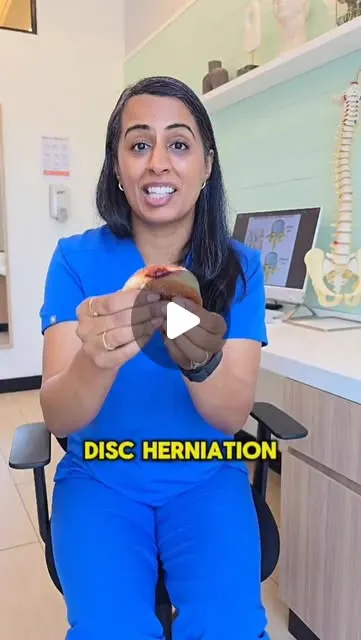 Watch the video"Slipped disc"? Disc bulge vs herniation explainedOn Instagram, @drhaleemachiropractor